Guiltfree indulgence is possible with my recipe for diabetic chocolate chip cookies that will satisfy your cravings without compromising your health. I understand your concerns about sugar and carbohydrates, which is why I focus on using natural sweeteners and healthy fats to create a delicious treat. By incorporating ingredients that are low in sugar and high in fiber, you can enjoy your favorite cookies without the worry of spiking your blood sugar. Join me as we explore how to make these irresistible cookies that let you indulge without the guilt.
Redefining Sweetness: Exploring Diabetic-Friendly Ingredients
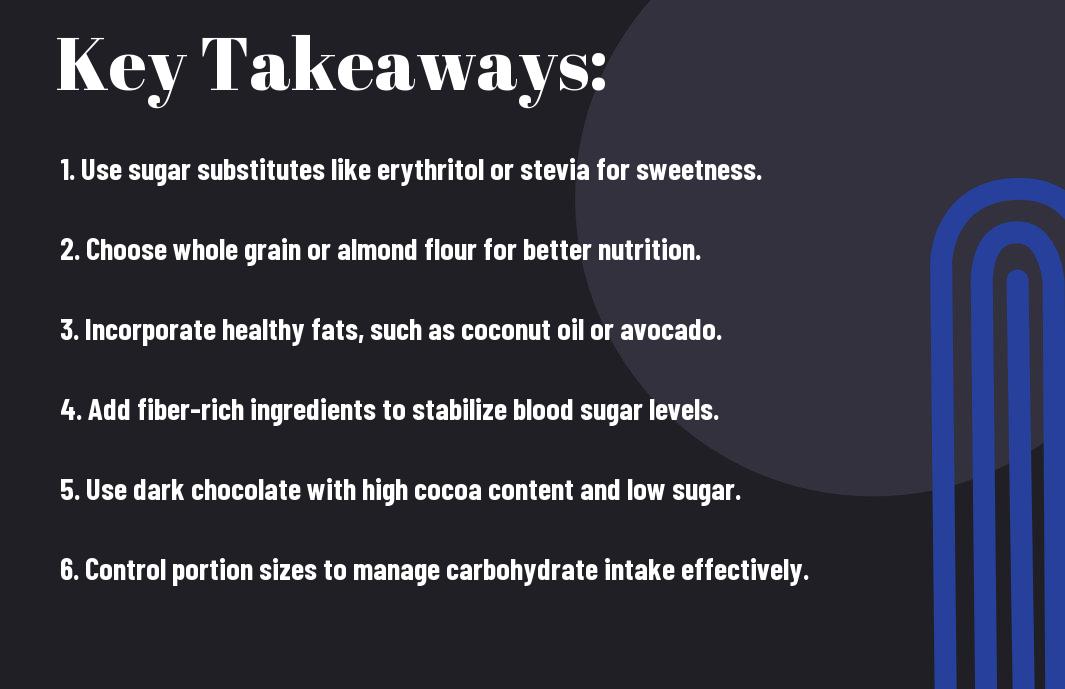
As far as baking diabetic-friendly treats, embracing alternative sweeteners can change your approach to sweetness entirely. Ingredient choices significantly impact not only the flavor but also the nutritional profile of our beloved chocolate chip cookies. By focusing on options that deliver the sweetness we crave without the associated blood sugar spikes, you can indulge without guilt and enjoy the delightful experience of homemade cookies that cater to your dietary needs.
The Role of Natural Sweeteners in Baking
Natural sweeteners, such as stevia, erythritol, and monk fruit extract, provide a fantastic way to substitute traditional sugar in recipes. They enhance flavor without contributing to the same caloric and glycemic load as refined sugars. These options can be found in various forms, including powders and liquids, allowing for flexibility in measurements and flavors. This shift not only makes our cookies diabetic-friendly but also adds a unique twist to their taste.
Comparing Sugar Substitutes: Pros and Cons
Understanding the benefits and drawbacks of various sugar substitutes will help you make informed choices when baking. Different sweeteners have unique properties, and I find it helpful to weigh their pros and cons against my baking goals. Here’s a simplified comparison:
Pros and Cons of Sugar Substitutes
| Pros | Cons |
|---|---|
| Stevia: Natural, calorie-free | Stevia: May have a bitter aftertaste |
| Erythritol: Low-calorie, zero glycemic index | Erythritol: Can cause digestive discomfort in some |
| Monk fruit: Zero calories, 100-250 times sweeter | Monk fruit: More expensive than sugar |
| Agave nectar: Vegan, low glycemic index | Agave nectar: Higher in fructose, can be misleadingly high in calories |
| Coconut sugar: Less processed, contains minerals | Coconut sugar: Still has calories and can impact blood sugar |
| Splenda: Widely available, easy to use | Splenda: Artificially made, potential digestive issues |
As I explore sugar substitutes, I find that personal preferences and tolerances play a significant role. While some people might quickly gravitate towards stevia for its natural source and no calories, others may lean towards erythritol or monk fruit for their mild flavor profiles. Testing various sweeteners can uncover the perfect fit for your taste and health needs, making baking diabetic-friendly cookies a delicious adventure.
The Art of Texture: Crafting the Perfect Cookie Base
Achieving the ideal texture in your diabetic chocolate chip cookies hinges on the cookie base. Striking a balance between crispy edges and a chewy center elevates your treat from ordinary to truly special. It’s all about your choice of ingredients and their ratios; I often find that the right blend of sweeteners and low-carb flours not only reduces sugar impact but enhances that coveted texture. Paying attention to the mixing process and baking time can also make a noticeable difference—it’s these subtle adjustments that transform a good cookie into one that you’ll find irresistible.
Understanding Gluten-Free Flours and Their Benefits
Experimenting with gluten-free flours can open up a world of texture possibilities in your cookies. Almond flour and coconut flour, for instance, lend a moister crumb and nuttier flavor profile that complements chocolate chips beautifully. They’re also rich in healthy fats and fiber, which can stabilize blood sugar levels, making them a wise choice for anyone looking to create a diabetic-friendly dessert.
Incorporating Healthy Fats for Richness Without Guilt
Healthy fats like coconut oil, avocado oil, or nut butters not only enhance the flavor but also contribute to a richer texture. These fats provide a creaminess that allows you to enjoy every bite without the guilt associated with traditional butter or margarine. Replacing unhealthy fats with these alternatives does not compromise on taste—rather, they amplify the flavor and overall experience of savoring your cookies.
You can achieve decadence without the heaviness by opting for fats that are both wholesome and full of flavor. For example, using coconut oil gives a subtle tropical hint and a rich, creamy mouthfeel, which is perfect for complementing warm chocolate chips. Similarly, nut butters like almond or peanut offer a complex flavor that adds depth to your cookie, while boosting the nutritional profile. Not only do these ingredients lend an appealing texture but they help keep you feeling satiated, making it easier to enjoy a moderate portion without feeling deprived.
The Secret to Flavorful Additions: Enhancing Every Bite
Flavorful additions can elevate your diabetic chocolate chip cookies beyond the ordinary. By incorporating a variety of ingredients, you can create an irresistible taste sensation with each bite. Think about adding a pinch of salt to balance the sweetness or incorporating vanilla extract for a comforting aroma. Experimenting with dried fruits, such as unsweetened cranberries or raisins, can introduce a chewy texture and hint of natural sweetness without spiking blood sugar levels, all while keeping your cookies deliciously satisfying.
Nuts, Seeds, and Spices: Nutritional Powerhouses
Nuts, seeds, and spices bring vital nutrients to your cookies, making them not only tastier but also healthier. Chopped walnuts or almonds add a delightful crunch and healthy fats, while chia seeds or flaxseeds provide fiber and omega-3 fatty acids. Spices like cinnamon or nutmeg not only enhance flavor but can also stabilize blood sugar levels, offering a healthful twist to your baked goods that’s both satisfying and beneficial.
The Impact of Dark Chocolate on Blood Sugar Levels
Dark chocolate, especially varieties with over 70% cocoa, can be a wise choice for diabetic-friendly cookies. Its high cocoa content provides antioxidants and lowers the glycemic index compared to milk chocolate, making it less likely to cause rapid spikes in blood sugar. Plus, dark chocolate has been shown to improve insulin sensitivity and overall heart health, allowing you to enjoy a guilt-free indulgence while reaping health benefits.
Perfecting Your Recipe: Steps for Baking Success
Achieving the ideal cookie requires careful attention to detail and methodical execution of your baking process. Begin with a solid foundation: your ingredients and their ratios. Ensure you’re using high-quality substitutes like almond flour for a nutty base and erythritol or stevia for sweetness. Follow the steps in your recipe closely and embrace the joy of experimenting to find what works best for your palate.
Measuring Techniques for Consistent Results
Accurate measurements lay the groundwork for the perfect batch of diabetic chocolate chip cookies. Use a digital scale for ingredient accuracy and scoop flour using the spoon-and-level technique to avoid using too much. Liquid ingredients should be measured with clear markings on a liquid measuring cup to ensure consistency.
Baking Tips for Optimal Taste and Texture
Achieving delectable cookies involves more than just the right ingredients; the baking process plays a pivotal role. Start by preheating your oven to the correct temperature, as this impacts how your cookies rise and set. Consider using parchment paper to prevent sticking and allow even heat distribution. I also suggest chilling the dough before baking to enhance flavor and texture. This simple step can yield cookies that are crisp on the outside yet chewy within.
- Preheat your oven properly to ensure even baking.
- Chill your dough before baking for better flavor and chewy texture.
- Use parchment paper to prevent sticking and promote even heat distribution.
Chilling your cookie dough serves several functions, from improving the texture to intensifying the flavors. As the dough rests in the refrigerator, the flour absorbs moisture, which leads to a thicker and chewier cookie once baked. Furthermore, this process allows any spices or flavoring to meld beautifully. Ultimately, it’s about patience; the wait is worth the delicious results.
- Allow time for resting to improve flavor development.
- Monitor baking time closely to avoid overbaking.
- Experiment with texture by adjusting ingredient ratios.
Each small tweak in your baking approach can lead to significant improvements in the final product. Observing the temperature and humidity of your environment may also influence how your cookies turn out. So, feel encouraged to take notes on your baking experiments, tweaking ingredients and methods to align with your personal taste preferences. After mastering these tips, you’ll be able to enjoy delightful diabetic chocolate chip cookies without guilt.
Mindful Enjoyment: Eating Cookies Without the Guilt
Enjoying a cookie can be a joyful experience, especially when approached with mindfulness. Savor each bite; let the flavor wash over you and appreciate the texture. By focusing on the moment and truly tasting your treat, you can indulge without the burden of guilt. Awareness during the eating experience allows you to satisfy your cravings while feeling relaxed about your choices. Embracing a mindful eating practice transforms a simple cookie into a much more fulfilling and less anxiety-inducing experience.
Balancing Treats with Nutrition
Integrating cookies into your diet is achievable with the right balance. I often emphasize the importance of pairing treats with nutritious components. Incorporating wholesome ingredients, such as nuts or seeds, not only enhances nutrition but also promotes a sense of fullness. A delicious cookie doesn’t have to derail your health goals; instead, it can complement a balanced meal plan and enhance your overall well-being, allowing you to enjoy treats without compromising your nutritional needs.
Strategies for Moderation and Indulgence
Moderation is my guiding principle when it comes to enjoying cookies. Rather than denying myself entirely, I focus on smaller portions or fewer cookies per sitting. For instance, I often pre-portioned my dough before baking, making it easier to control how many I eat. Sharing with friends or family also helps me indulge without guilt, as I can enjoy the treats while splitting the quantity. This strategy helps maintain the joy of indulgence while keeping an eye on my health.
Being mindful of portions can transform your cookie-eating experience. I find it useful to take a moment before indulging, considering how many cookies I’d truly like to enjoy. Using smaller plates or bowls can also trick my mind into feeling satisfied with less. Experiment with savoring the flavors of each cookie; this creates a fulfilling moment that doesn’t lead to overindulgence. By merging enjoyment with responsibility, I create a delightful harmony between treating myself and maintaining my health.
Summing up
Considering all points, I believe that creating irresistible diabetic chocolate chip cookies without guilt is entirely achievable. By using alternative sweeteners, whole grain flours, and portion control, you can indulge your cravings while maintaining your health. I encourage you to experiment with recipes, balancing flavor and nutrition to find what works best for you. With a little creativity and the right ingredients, your treats can be both delightful and diabetic-friendly, allowing you to enjoy delicious cookies without compromising your well-being.