As a diabetic, finding delicious yet safe sweet treats can be a challenge. If you’re looking for a way to indulge your sweet tooth without compromising your health, I’ve found the perfect solution: a low-sugar banana bread recipe that satisfies your cravings while keeping your blood sugar in check. With minimal ingredients and a few simple steps, you can enjoy a delightful homemade snack that’s both wholesome and enjoyable. Let’s investigate how you can savor this sweet delight without the guilt!
The Sweet Science of Banana Bread
Banana bread is more than just a comfort food; it’s a chemistry experiment in your kitchen. Ripe bananas contribute moisture and sweetness, while baking soda creates that perfect rise. Each ingredient plays its role, resulting in a fluffy, satisfying loaf that everyone loves. Beyond its delightful aroma and taste, understanding the science behind every banana bread recipe allows you to tweak it for your personal dietary needs, especially when managing diabetes.
Nutritional Benefits of Bananas
Bananas are an excellent source of nutrients vital for overall health, particularly for those with diabetes. Rich in potassium and vitamin C, a medium-sized banana contains about 105 calories and 27 grams of carbohydrates, including 3 grams of fiber. This fiber aids in digestion and can help stabilize blood sugar levels. The natural sweetness makes bananas a satisfying addition to a diabetic-friendly diet, especially in moderation.
Sugar Alternatives: Sweet Solutions for Diabetics
Finding sweeteners that won’t spike blood sugar levels is important for creating a flavorful diabetic banana bread. Options like stevia, erythritol, and monk fruit provide sweetness with fewer calories and a low glycemic index. Each of these alternatives allows you to enjoy the delightful flavors without compromising your health. They can often replace sugar on a 1:1 basis, which is convenient for recipe adjustments.
Exploring sugar alternatives adds an exciting dimension to your baking. Stevia, derived from the leaves of the stevia plant, is often praised for its zero-calorie content and is approximately 50-300 times sweeter than sugar, so a little goes a long way. On the other hand, erythritol is a sugar alcohol that offers bulk, closely resembles sugar’s taste, and generally does not raise blood sugar levels. Monk fruit extract has gained popularity for its natural sweetness and antioxidant properties. These options allow you to savor your banana bread without that guilty aftertaste of traditional sugar.
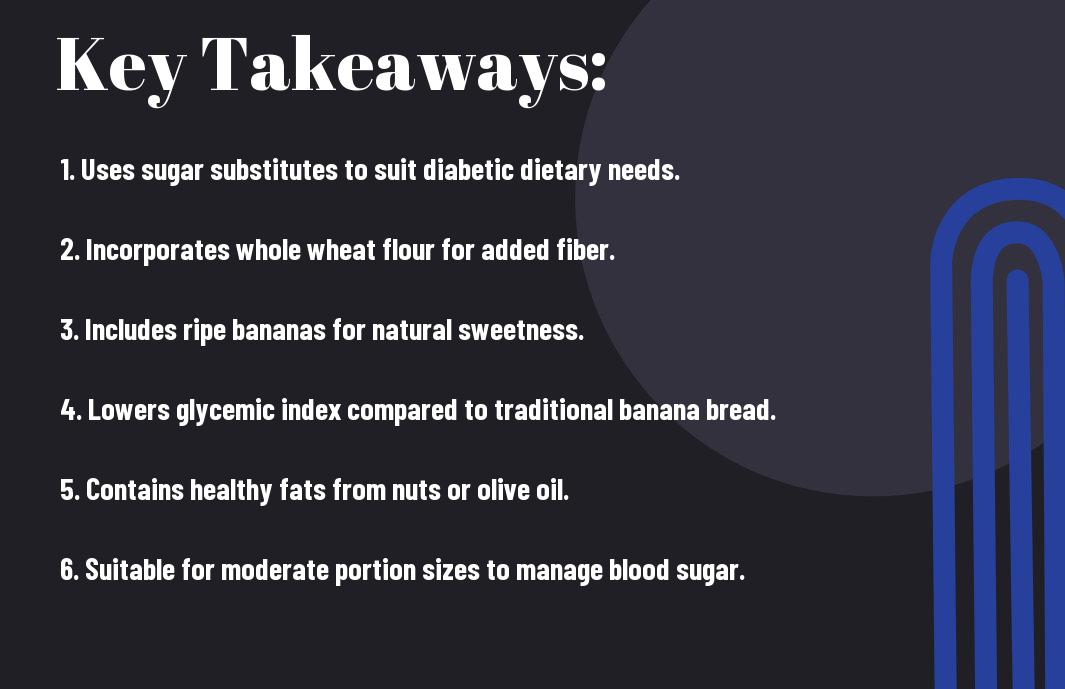
Crafting Your Diabetic-Friendly Banana Bread
Creating a delightful diabetic-friendly banana bread starts with the perfect balance of ingredients that satisfy your sweet tooth without compromising health. By selecting low-glycemic options and nutritious add-ins, I ensure each slice is both flavorful and respectful of blood sugar levels. It’s not just about avoiding sugar; it’s about elevating the entire recipe to include wholesome flavors and textures.
Essential Ingredients and Their Health Benefits
This recipe calls for ripe bananas, almond flour, eggs, and a sugar substitute like stevia or erythritol. Ripe bananas offer natural sweetness and potassium, while almond flour provides healthy fats, fiber, and protein, aiding in blood sugar control. Stevia is a natural sweetener with zero calories, making it ideal for diabetics, and eggs add richness and structure along with necessary nutrients.
Step-by-Step Preparation Guide
To create this banana bread, I begin by preheating the oven to 350°F (175°C). The first step involves mashing the ripe bananas in a bowl, blending them with almond flour, eggs, and the chosen sugar substitute until fully mixed. Transfer the mixture to a greased loaf pan and bake for about 50-60 minutes. As it bakes, the aroma will invigorate your kitchen, reminding you that a blissful treat is on its way.
| Preparation Step | Description |
| Preheat Oven | Set to 350°F (175°C). |
| Mash Bananas | Use a fork or mixer until smooth. |
| Mix Ingredients | Combine bananas, almond flour, eggs, and your sweetener. |
| Transfer to Pan | Grease a loaf pan and pour in the batter. |
| Bake | Cook for 50-60 minutes or until golden brown. |
In the preparation guide, each step is designed for efficiency and simplicity, allowing you to focus on texture and taste. Preparing your ingredients ahead of time will make mixing quick and enjoyable. Baking until the tops are golden brown not only signals that the bread is done but also enhances the overall flavor, thanks to the beautiful caramelization happening within the loaf. A toothpick test can ensure it’s perfectly baked through—just insert one and see if it comes out clean! Enjoy every bite knowing it’s tailored to your dietary needs.
| Why This Recipe Works | Benefits Achieved |
| Low-Glycemic Ingredients | Stabilizes blood sugar levels. |
| Nutrient-Dense | Offers vitamins and minerals. |
| Rich in Flavor | Makes for a satisfying treat. |
Taste Testing: How Does It Measure Up?
After baking the diabetic banana bread, I couldn’t wait to dive in for a taste test. The results were impressive, demonstrating that healthy recipes don’t compromise on flavor. The banana bread was moist and tender, with a subtle sweetness that didn’t overwhelm my palate. A comforting aroma filled my kitchen, making it hard to resist a second slice. I found that each bite delivered a satisfying combination of flavors, proving that it’s possible to enjoy a guilt-free treat while keeping blood sugar in check.
Flavor Comparisons: Traditional vs. Diabetic Versions
| Characteristic | Traditional Banana Bread |
|---|---|
| Sugar Content | High (1 cup of sugar) |
| Sweetness Level | Very Sweet |
| Caloric Value | High (approx. 200-250 calories per slice) |
| Satisfaction | Full of rich banana flavor |
| Diabetic Banana Bread | Reduced (3/4 cup erythritol) |
| Sweetness Level | Moderate |
| Caloric Value | Lower (approx. 100-150 calories per slice) |
| Satisfaction | Rich banana essence with nutty undertones |
Expert Reviews and Testimonials
Feedback from nutritionists and home bakers alike has been overwhelmingly positive about the diabetic banana bread. Many have commented on how well the recipe holds its flavor without the added sugars, allowing for the natural sweetness of bananas to shine through. One nutrition expert noted, “This recipe maintains the beloved texture of traditional banana bread while significantly cutting down on carbs.” Others praised it as an excellent alternative for those with dietary restrictions, making it a staple recipe for family gatherings.
Furthermore, testimonials from various bakers highlight how easy it is to incorporate this recipe into regular meal planning. Many have shared that they appreciate being able to enjoy dessert without guilt or worry about their blood sugar levels. One recurring sentiment is a sense of relief and joy in discovering a delicious option that aligns with healthier eating habits. This diabetic banana bread is not just a recipe; it’s a game-changer for those navigating a sweet tooth within their dietary needs.
Integrating Banana Bread Into a Diabetic Meal Plan
Including banana bread in your diabetic meal plan can be both simple and enjoyable. By choosing whole grain flours and incorporating ingredients with low glycemic indices, such as nuts or seeds, you can create a carbohydrate-conscious treat. Paying attention to your overall carbohydrate intake is key, so enjoy a slice alongside a meal or as part of a balanced snack, ensuring it fits within your daily dietary goals and personal blood sugar management strategies.
Portion Control and Serving Suggestions
Portion control is important when enjoying diabetic-friendly banana bread. I suggest cutting your slice no thicker than one inch to maintain a satisfying yet responsible portion, ideally pairing it with a source of protein, like a hard-boiled egg or a handful of almonds. This balance helps manage blood sugar levels while still allowing you to indulge in the comforting taste of banana bread.
Pairing with Other Diabetic-Friendly Foods
Enhancing your banana bread experience is easy when you pair it with other diabetic-friendly foods. Consider serving it with Greek yogurt or a small serving of fresh berries, which provide additional fiber and antioxidants without spiking your blood sugar. You could also enjoy it with a dollop of nut butter for extra protein and healthy fats, creating a satisfying and well-rounded snack or breakfast option.
Pairing banana bread with foods high in protein and healthy fats creates a complementary meal. For instance, serving a slice with a tablespoon of almond or peanut butter not only enriches the flavor profile but also adds staying power to your meal. This dynamic duo keeps you fuller longer and balances blood sugar levels, making it easier to enjoy your banana bread without worrying about glucose spikes. Fresh berries are another excellent choice; they bring antioxidants and a burst of flavor while keeping your carb count in check.
Creative Twists on the Classic Recipe
Transforming the traditional banana bread recipe into something distinct can elevate your baking experience. I love experimenting with flavors like adding a hint of almond extract, which gives a delightful twist. You might also consider swapping out some of the bananas for roasted sweet potatoes or pumpkin puree to introduce an entirely new taste profile. These creative adaptations not only keep things interesting but often enhance the overall nutrition of the bread.
Fun Add-ins and Flavor Enhancements
Add-ins can take your banana bread to the next level. Incorporating ingredients such as chopped nuts, dark chocolate chips, or dried fruit creates an explosion of textures and flavors. I’ve even tried mixing in spices like cinnamon and nutmeg, which add warmth and depth to the sweetness of the bananas. Don’t hesitate to get adventurous—like using cardamom for a unique aromatic touch!
Baking Variations to Suit Dietary Needs
Altering recipes to fit various dietary requirements helps ensure everyone can enjoy a slice of banana bread. I often swap all-purpose flour for gluten-free alternatives, like almond or coconut flour, maintaining moisture and flavor without gluten. Additionally, while using unsweetened applesauce is a fantastic way to replace refined sugars, you can also choose to make it keto-friendly by incorporating nut flours and sugar substitutes.
For those needing to further adapt recipes, consider nut-free variations by using sunflower seed butter, which is a great alternative that won’t compromise texture or taste. If you’re monitoring carb intake, substituting stevia or erythritol for sugar can help maintain sweetness without the spikes. I love that making these variations doesn’t mean sacrificing flavor but rather enhancing it through thoughtful substitutions. Ultimately, getting creative in baking allows me to tailor delicious desserts that cater to my dietary needs without missing out on the joy of sweet treats.
Summing up
Ultimately, you can absolutely savor a sweet delight with this diabetic banana bread recipe. I find it a fantastic way to enjoy a treat without compromising your health. By using wholesome ingredients, you can create a delicious bread that satisfies your sweet tooth while keeping your blood sugar in check. I encourage you to give it a try; your taste buds and your health will thank you!