Recipe development for the ultimate diabetic cookies involves a blend of careful ingredient selection and a deep understanding of nutritional profiles. As I explore this topic, I will share the artistry behind balancing flavors and textures while ensuring these treats are safe for those managing their diabetes. You’ll discover that using natural sweeteners alongside healthy fats can yield delicious results without compromising on taste. Join me in exploring the techniques that transform simple ingredients into satisfying cookies you can feel good about enjoying.
The Art and Science of Ingredient Selection
Ingredient selection is not just about picking what’s available; it’s an intricate dance between flavor, texture, and nutritional integrity. Each component of my diabetic cookies is chosen carefully to ensure that the end product meets your health needs without compromising on taste. I look at the glycemic index, nutrient profile, and baking properties of every element, crafting a balanced recipe that delights the palate while being mindful of blood sugar levels.
The Role of Low-Glycemic Sweeteners
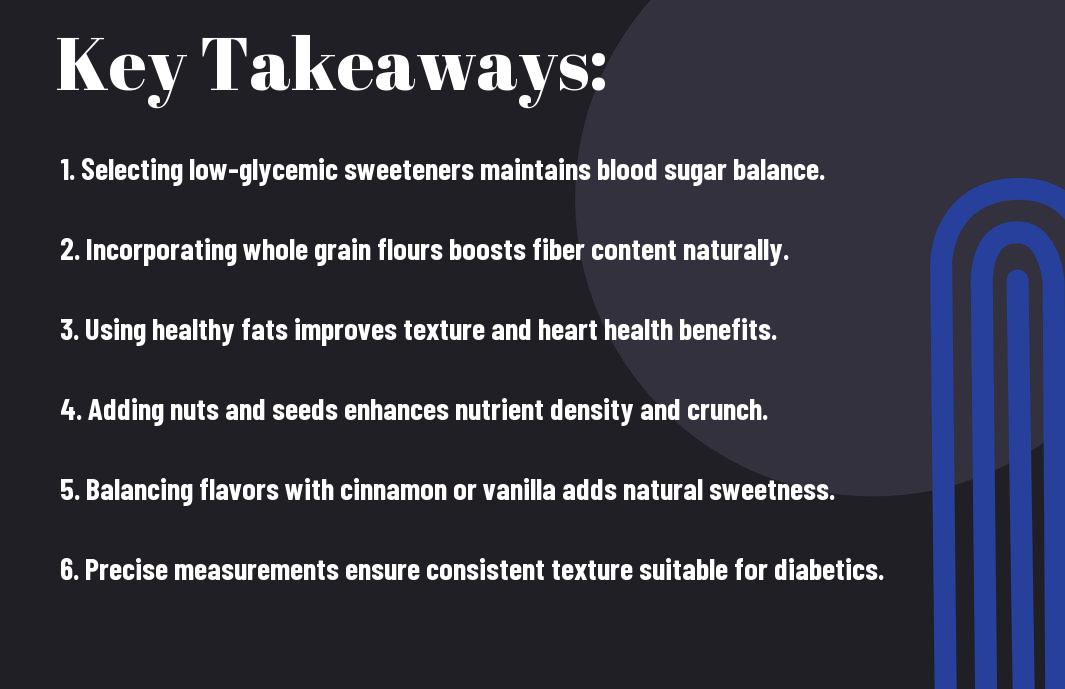
Utilizing low-glycemic sweeteners like monk fruit, erythritol, and stevia transforms traditional cookie recipes into diabetic-friendly versions. These alternatives provide sweetness without the sharp spikes in blood sugar, allowing you to indulge in dessert without guilt. By carefully measuring these sweeteners, I can achieve the perfect level of sweetness while keeping your health in mind.
Selecting Flours for Flavor and Texture
Flour selection significantly impacts not only the texture but also the overall character of your diabetic cookies. I often blend almond flour for its delightful nuttiness and protein content with coconut flour, which adds fiber and a hint of sweetness. This combination results in a cookie that is both moist and hearty while keeping carbohydrates in check. The careful balance of these flours creates a satisfying bite without undesired blood sugar fluctuations, ensuring you get both pleasure and nutrition in every cookie.
When opting for flours for flavor and texture, I pay close attention to how they absorb moisture and interact with other ingredients. For instance, almond flour lends a rich, buttery flavor and contributes healthy fats, while coconut flour creates a light, airy texture due to its high absorbency. This combination allows me to engineer cookies that are not only delicious but also packed with nutrients. Structural integrity is crucial; thus, the addition of a binding agent, such as eggs or flaxseed meal, helps achieve that perfect cookie consistency, one that truly satisfies your cravings without sacrificing your health.
Crafting Flavor Profiles that Delight
Creating the ultimate diabetic cookies is not just about reducing sugar; it’s also about designing a flavor profile that excites your palate. Carefully selecting ingredients allows for a harmonious blend of flavors that both satisfies sweet cravings and maintains a balanced taste. Utilizing items such as almond flour, coconut flour, or oat fiber can add depth. Everyone can appreciate a cookie that doesn’t sacrifice flavor, even in a health-conscious recipe.
Balancing Sweetness with Spices
Finding the right balance between sweetness and spices is necessary for elevating your cookie experience. Incorporating spices like cinnamon, nutmeg, or ginger can add complexity and warmth, creating a delightful contrast to the sweetness of alternative sweeteners. By adjusting the ratio of sweetener to spice, you can achieve a unique and satisfying taste that keeps your cookie from being one-dimensional.
Enhancing Taste with Natural Additives
Opting for natural additives can provide an additional layer of flavor that enhances your diabetic cookies. Ingredients like unsweetened cocoa powder, vanilla extract, or even a splash of almond milk can contribute to the overall profile without adding excessive calories or sugar. These additions not only enrich the flavor but also create a more appealing texture, keeping each bite interesting and enjoyable.
Natural additives can dramatically change the way your cookies taste and feel. For example, I love incorporating unsweetened cocoa powder into my recipes, which offers a rich chocolate flavor while keeping the sugar content in check. Vanilla extract brings a comforting element that pairs beautifully with spices, enhancing the overall experience. You can also consider using pureed fruits such as bananas or applesauce, which lend moisture and subtle sweetness without the guilt associated with traditional sweeteners. By thoughtfully selecting these additives, you ensure that every cookie delivers a memorable taste sensation, making your diabetes-friendly treat a must-have in your dessert repertoire.
The Techniques Behind Perfect Texture
Achieving the ideal texture in diabetic cookies is a delicate dance of various baking techniques. Balancing moisture and air, sugar substitutes, and even the type of flour can make all the difference. Each ingredient plays a specific role in crafting a cookie with that perfect crunch or chewiness that lingers on the palate. Whether I’m aiming for a crispy edge or a soft center, I pay close attention to details that elevate the entire experience of enjoying cookies while accommodating dietary needs.
Mastering Baking Methods for Optimal Crunch
To obtain that satisfying crunch in diabetic cookies, I employ techniques such as baking at a higher temperature and using almond flour for a drier texture. Timing is everything; pulling cookies from the oven when they are slightly underbaked helps maintain moisture, while allowing them to rest on the baking sheet before transferring to a wire rack ensures a consistent crunch. This balance transforms otherwise normal recipes into delightful masterpieces.
The Importance of Chilling Dough
Chilling the dough is more than just a suggestion; it’s a necessary step in developing flavors and textures. By letting the cookie dough rest in the refrigerator for at least 30 minutes, I’m allowing the ingredients to meld together and firm up. This process hydrates the flour, preventing excessive spreading and resulting in a thicker, chewier cookie. Moreover, chilling can enhance the flavors significantly, offering a more robust taste with each bite.
Typically, I recommend chilling your dough for at least an hour, especially if your recipe includes butter. The cool temperatures slow down the spreading process and create a beautifully structured cookie. Skipping this step often results in flatter, denser cookies that lack the delightful texture we all seek. I’ve found that the right chill time dramatically elevates the overall quality, making it well worth the wait for any cookie lover.
Nutritional Considerations and Health Benefits
Healthy baking means understanding the nutritional profile of every ingredient in your diabetic cookie recipe. By selecting ingredients that offer not just low glycemic index values but also additional health benefits, you can create a treat that satisfies your sweet tooth while being kind to your blood sugar levels. From adding whole grains to incorporating healthy fats, every choice contributes to a cookie that not only tastes great but also nourishes your body effectively.
Understanding Carb Counts and Portions
Knowing the carb content per serving not only helps in managing diabetes but also allows you to enjoy your cookies without guilt. Each ingredient carries a specific carbohydrate count, and keeping portions in check ensures that you can savor each bite without compromising your health goals. For example, an ideal cookie recipe should aim for no more than 15 grams of carbs per serving, aiding you in maintaining stable blood sugar levels.
The Role of Nutrient-Dense Ingredients
Nutrient-dense ingredients play a pivotal role in enhancing the overall quality of your diabetic cookies. By choosing items such as almond flour, chia seeds, or unsweetened applesauce, you infuse cookies with important vitamins, minerals, and healthy fats. For instance, almond flour not only reduces the carb count but also adds protein and healthy omega-3s, making your treat satisfying and nutritious.
Utilizing nutrient-dense ingredients elevates your cookies beyond simple desserts. Almond flour is packed with 6 grams of protein and 13 grams of healthy fats per 1/4 cup, which contributes to satiety and stable energy levels. Incorporating flaxseeds or chia seeds introduces fiber and omega-3 fatty acids, both crucial for heart health and digestive function. Unsweetened applesauce serves as a natural sweetener while reducing the need for refined sugars. The result is not just a cookie but a nourishing snack that supports your health goals without the guilt of traditional treats.
Real-Life Feedback and Iterations
Feedback from actual bakers and those living with diabetes has been a game-changer, helping me refine my cookie recipes. Each iteration not only improved the flavor and texture but also ensured the recipes met the dietary needs of the diabetic community. I’ve gathered insights that have led to small tweaks, like adjusting the sweetener balance or experimenting with different flour types. These real-world tests have illustrated how even a slight change can have a significant impact on overall satisfaction and health.
Testing Recipes with a Diabetic Perspective
In my quest for the perfect diabetic cookie, I’ve focused heavily on testing recipes with a diabetic perspective. I made sure to include natural sweeteners that wouldn’t spike blood sugar levels, like stevia or erythritol. Through these tests, I also monitored not just the cookies’ taste but their impact on blood glucose. Keeping track of glycemic responses during these trials ensured that each cookie strikes a balance between indulgence and dietary safety.
Gathering Insights from the Cookie Community
Diving into the cookie community has opened my eyes to various perspectives on baking for specific dietary needs. I engaged with online forums, social media groups, and local baking clubs, where I could learn from experiences shared by others. This collaboration has provided invaluable tips, honed my understanding of preferred flavors, and even highlighted common pitfalls in diabetic baking.
Connecting with the cookie community revealed nuanced preferences that I hadn’t initially considered. I discovered that many bakers were looking for recipes that not only tasted good but also evoked nostalgia. Incorporating ingredients like almond flour or dark cocoa not only appealed to their taste buds but also fit into their diabetic lifestyle. Real-life feedback led me to explore cultural variations in cookie recipes, bringing a rich diversity to my own. Overall, this exchange of ideas reinforced the importance of community input in crafting recipes that resonate widely.
Summing up
Hence, the art of crafting the ultimate diabetic cookies recipe lies in the thoughtful selection of ingredients, the balance of flavors, and an understanding of sugar alternatives. By focusing on high-quality, wholesome components that cater to your dietary needs, I believe you can create a delightful treat that doesn’t sacrifice taste or health. When you approach baking with intention and care, your cookies will not only satisfy your sweet cravings but also support your well-being. Embrace the process and enjoy sharing your delicious creations with others!