You might be wondering if blueberries can enhance your diabetic muesli recipe without causing blood sugar spikes. As a nutrition enthusiast, I’ve explored the benefits of incorporating these antioxidant-rich fruits into your meals. Blueberries are not only low in calories, but they also offer a wealth of necessary vitamins and fiber, making them a great addition to your breakfast. In this post, I’ll share how you can leverage the potent benefits of blueberries while managing your diabetes effectively.
The Nutritional Profile of Blueberries
Blueberries are remarkably nutrient-dense, making them an ideal addition to a diabetic muesli recipe. Just one cup of fresh blueberries contains a mere 84 calories, along with 3.6 grams of fiber and 21 grams of carbohydrates, supporting your digestive health while keeping your blood sugar stable. These little berries also pack a powerful punch of vitamins, particularly vitamins C and K, as well as a variety of phytonutrients that can elevate the nutritional value of your meals. Their low glycemic index makes them a safe fruit choice for those managing diabetes.
Antioxidants: Nature’s Protective Agents
Loaded with antioxidants, blueberries combat oxidative stress in the body. The primary compounds, such as anthocyanins, not only give the fruit its vibrant color but also help reduce inflammation and lower the risk of chronic diseases, including heart disease and certain cancers. Including blueberries in your meals can contribute to overall health by neutralizing harmful free radicals and supporting cellular function.
Vitamins and Minerals: A Micronutrient Boost
Vitamins such as vitamin C and vitamin K are abundant in blueberries. Vitamin C acts as an antioxidant, bolstering your immune system, while vitamin K is vital for blood clotting and bone health. Additionally, blueberries provide small amounts of vital minerals like manganese, which plays a role in bone formation and enhancing metabolic processes. The impressive range of micronutrients in blueberries means they not only add flavor but also significant health benefits to your diabetic muesli recipe.
In detail, a single cup of blueberries offers about 24% of your daily vitamin C needs and 36% of your daily vitamin K intake. These vitamins work synergistically to enhance skin health and support strong bones. Manganese, found in blueberries, aids in the metabolism of carbohydrates and is linked to improved insulin sensitivity, making their consumption even more beneficial for those with diabetes. Incorporating these berries into your muesli not only boosts taste but also provides a wholesome mix of vital nutrients that contribute to your well-being.
Glycemic Impact: How Blueberries Fit into Diabetes Management
The glycemic impact of foods is a significant consideration in diabetes management, and blueberries are a smart choice due to their low glycemic nature. This means that they release sugar into the bloodstream slowly, preventing rapid spikes in blood sugar levels. This is especially beneficial for individuals managing diabetes, as maintaining stable glucose levels is a key aspect of controlling the condition. Including blueberries in your muesli can enhance the overall quality of your meal while supporting your health goals.
Low Glycemic Index and Its Benefits
With a low glycemic index (GI) of around 53, blueberries are a safe fruit option for diabetics. Foods with a low GI provide a steadier release of energy and nutrients, ultimately helping you feel fuller longer. By adding blueberries to your morning muesli, you can enjoy a delicious, nutrient-packed breakfast that keeps your blood sugar in check.
Fiber Content: Balancing Blood Sugar Levels
High in fiber, blueberries play a vital role in managing your blood sugar levels. A one-cup serving of blueberries contains about 3.6 grams of dietary fiber, which not only aids in digestion but also helps slow down the absorption of sugar into your bloodstream. This slower absorption rate can be key in preventing blood sugar spikes and promoting a healthier balance.
Fiber has a remarkable ability to enhance blood sugar control. It encourages a gradual release of glucose, which helps avoid the unwanted surges that come after consuming high-sugar foods. Consider a study published in the Journal of the American College of Nutrition, which found that increased fiber intake is linked to improved blood sugar levels among diabetics. Therefore, incorporating blueberries into your muesli provides not only a tasty element but also a significant health advantage, helping you maintain stable glucose levels throughout the day.
Crafting the Perfect Diabetic Muesli: Ingredient Synergy
Your diabetic muesli recipe can reach new heights by focusing on the synergy of ingredients. Choosing the right components not only enhances flavor but also optimizes nutrient absorption, which is vital for blood sugar management. Combining whole grains, natural sweeteners, and fresh produce creates a balanced meal that satisfies both your palate and your body. Incorporating functional ingredients like chia seeds or Greek yogurt can amplify the health benefits, making breakfast an energizing and health-promoting start to the day.
Blueberry Pairings for Optimal Health Benefits
Pairing blueberries with other superfoods can maximize their health benefits. For instance, mixing them with Greek yogurt not only adds protein but also helps stabilize blood sugar levels. Adding nuts like walnuts can provide omega-3 fatty acids, which support heart health—a vital consideration for diabetics. Additionally, combining blueberries with spices such as cinnamon can help further regulate blood sugar levels, turning your muesli into a powerhouse meal.
Alternative Grains and Nuts for Blood Sugar Control
Opting for alternative grains and nuts can significantly influence blood sugar levels. Quinoa, for example, is a complete protein that has a low glycemic index, making it an excellent base for muesli. I often mix in almonds, known for their ability to promote satiety and stabilize blood sugar due to their healthy fats and fiber content. These grains and nuts not only contribute vital nutrients but also support sustained energy release throughout the day, making them vital allies in blood sugar management.
Include grains like buckwheat or oats, both of which boast a low glycemic index and provide a rich source of fiber. This fiber not only aids in digestion but also slows down the absorption of sugar, helping you avoid spikes in glucose levels. Pairing these with nuts such as pumpkin seeds can introduce beneficial magnesium, which plays a role in insulin sensitivity. By thoughtfully combining these ingredients, you enhance the nutritional profile of your muesli while maintaining steady blood sugar control throughout the morning.
Cooking Methods: Preserving Nutritional Value
When preparing blueberries for your muesli, the chosen cooking method can greatly influence their nutritional value. Cooking at low temperatures and for short durations helps retain water-soluble vitamins and antioxidants. Techniques such as steaming or lightly sautéing not only maintain their vibrant color but also ensure that the fiber content remains intact, which is beneficial for blood sugar management. Aim to incorporate blueberries into your muesli without excessive processing to fully enjoy their health benefits.
Fresh vs. Dried Blueberries: Impact on Nutrition
Fresh blueberries offer a higher water content and more vitamin C compared to their dried counterparts. While dried blueberries are convenient, they often possess added sugars that can impact your blood sugar levels negatively. I recommend opting for fresh blueberries whenever possible to maximize the antioxidants and nutrients while minimizing any unintended blood sugar spikes associated with the drying process.
Cooking Techniques to Enhance Flavor without Sacrificing Health
Utilizing specific cooking techniques can elevate the flavor of blueberries in your muesli without compromising their health benefits. For instance, gently heating blueberries can intensify their natural sweetness and make them more palatable while still preserving nutrients. Incorporating spices such as cinnamon or nutmeg during cooking can further enhance flavor without adding sugar or unhealthy fats. By keeping cooking times brief, I ensure that the vibrant color and nutritional integrity remain intact, resulting in an appetizing and healthful muesli bowl.
To enhance your muesli further, I often opt for a quick microwave method to warm blueberries. This short exposure to heat releases their juices and brightens their flavors, creating a syrup-like consistency that turns an ordinary bowl into a delightful treat. Additionally, pairing fresh blueberries with nuts or seeds not only adds a satisfying crunch but also contributes healthy fats and proteins, rounding out the dish while keeping it diabetes-friendly.
Real-Life Applications: Success Stories and Recipes
Hearing from diabetics who have successfully integrated muesli into their diets illustrates the versatility and potential health benefits of this breakfast option. Many individuals report steady blood sugar levels and improved satiety throughout the morning with simple tweaks like adding blueberries. For example, people have shared stories of losing weight and feeling more energy after swapping sugary cereals for muesli loaded with whole grains and fiber-rich fruits.
Testimonies from Diabetics Who Love Muesli
Numerous diabetics express their satisfaction with muesli, citing its ability to offer a balanced breakfast without causing spikes in blood sugar. One user noted that adding a handful of blueberries not only enhances flavor but also provides antioxidants, helping them feel healthier overall. Another individual emphasized that muesli’s high fiber content assists in maintaining their glycemic control, proving to be a game-changer in their daily routine.
Unique Variations on Classic Muesli Recipes
Exploring variations of traditional muesli recipes opens a world of creative and healthful options. For instance, consider including nuts, seeds, or different fruits to elevate the nutrient profile. A recipe featuring almond flakes, chia seeds, and unsweetened coconut provides an entirely new flavor while still focusing on low glycemic index ingredients. I encourage you to experiment with ingredient ratios and toppings, such as Greek yogurt or plant-based milk, to find the combinations that work best for you.
Summing up
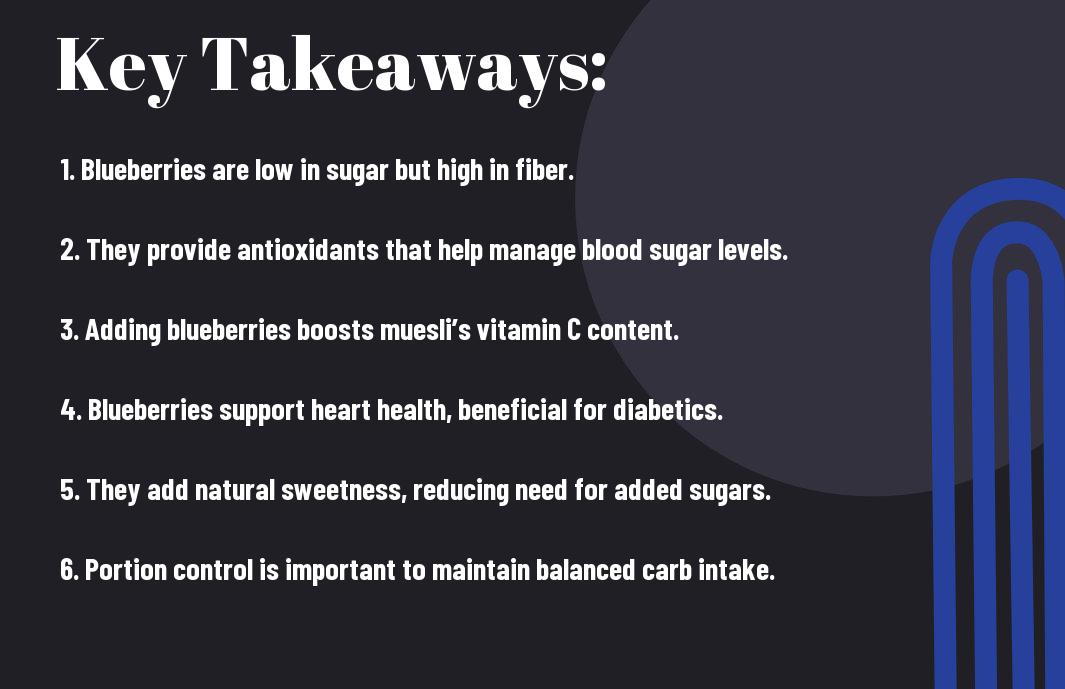
From above, it’s clear that incorporating blueberries into your diabetic muesli recipe can enhance your nutrient intake significantly. These berries are packed with antioxidants, vitamins, and fiber, which not only support your overall health but also help regulate blood sugar levels. By adding blueberries, I can offer you a delicious way to enjoy your muesli while ensuring it remains diabetes-friendly. So, consider including these nutrient powerhouses in your breakfast for a satisfying and health-conscious start to your day.