Over the years, I’ve discovered that achieving the perfect crunch in diabetic cookies can seem daunting, but it’s entirely possible. With the right ingredients and techniques, you can indulge in cookies that not only satisfy your sweet tooth but also fit into your diabetic lifestyle. In this post, I will share my tips and a fantastic recipe that ensures each bite delivers a delightful crunch without the excess sugars. Get ready to impress your taste buds while keeping your health in check!
The Science of Cookie Texture
The perfect crunch in cookies isn’t just a matter of chance; it’s rooted in the science of how ingredients and techniques interact during baking. The balance of moisture, fat, and sugar alongside the baking process itself shapes the texture. A crisp cookie starts with the right ratios and the proper baking methods, which lead to a delightful crunch that satisfies the cravings of both diabetic and non-diabetic cookie lovers alike.
The Role of Ingredients in Achieving Crunch
Ingredients play a pivotal role in determining cookie texture. Butter gives cookies richness and aids in achieving that desired crunch, while granulated sugar can create a crispier finish compared to brown sugar. Additionally, egg whites contribute to a lighter texture, making cookies less dense and more apt to develop a crunch. Using a combination of these ingredients can elevate your cookie game significantly.
Understanding the Impact of Baking Time and Temperature
Baking time and temperature are critical factors for achieving the ideal cookie crunch. Higher temperatures (around 350°F to 375°F) can promote quicker moisture evaporation, leading to a firmer texture. Always keep an eye on your cookies; pulling them out just before they appear fully baked will ensure they maintain an ideal crunch. Lower temperatures can produce softer cookies, which might be desirable for those who prefer chewy textures instead.
Understanding the Impact of Baking Time and Temperature
| Temperature Range | Texture Outcome |
|---|---|
| 325°F | Chewier, softer cookies |
| 350°F | Balanced texture, slightly crisp |
| 375°F | Crunchier cookies |
Testing different baking temperatures can lead to discovering your preferred cookie crunch. For instance, if you typically like a crisp edge, you might try baking at 375°F while checking at the 10-12 minute mark. Alternatively, experimenting with lower temperatures, from 325°F, combined with longer baking times can yield softer cookies suited to your tastes. Adjustments like these can fine-tune your baking and yield the perfect crunch you desire.
Summary of Impact of Baking Time and Temperature
| Factor | Influence on Texture |
|---|---|
| Baking Time | Longer baking times produce crunchier textures |
| Baking Temperature | Higher temperatures result in faster moisture loss |
Key Ingredients for Perfect Crunch
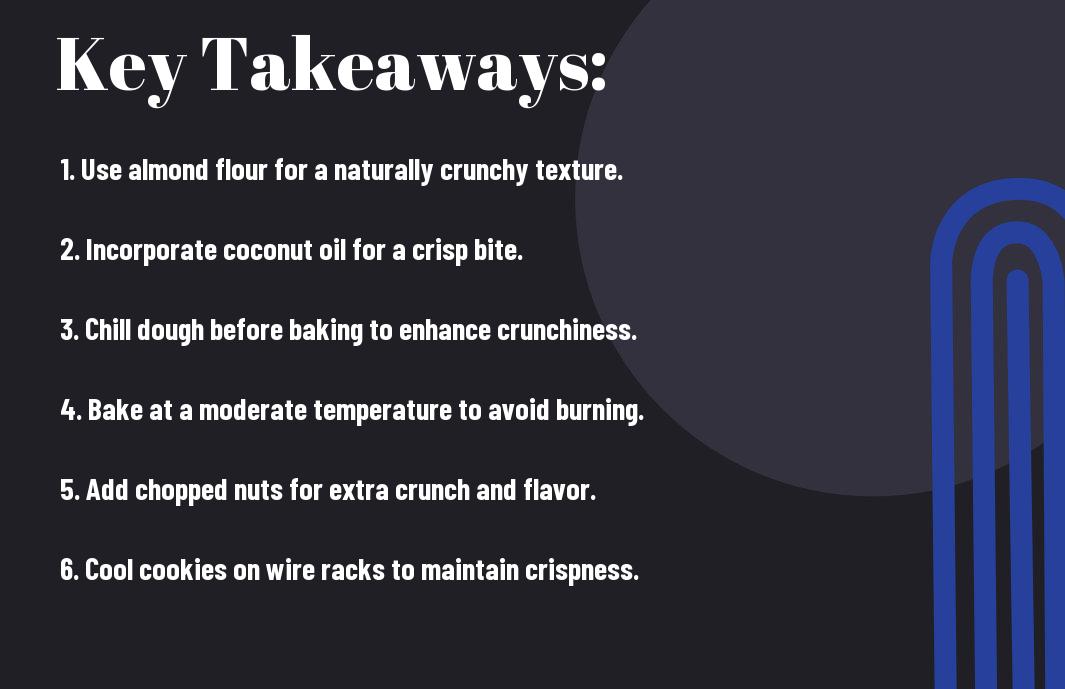
Achieving that desired cookie crunch hinges on a delicate balance of key ingredients. Flour selection plays a significant role; I recommend opting for a whole grain or almond flour, which not only adds nutritional benefits but also contributes to a delightful texture. Adding oats enhances crunchiness and flavor, while a handful of nuts brings diversity to every bite, enhancing both texture and healthy fats. Finally, using slightly less moisture-rich ingredients ensures the cookies firm up nicely as they bake, leading to that perfect crunch you desire.
Choosing the Right Sweeteners for Diabetics
Sweeteners can make or break the texture of diabetic cookies while keeping sugar levels in check. I favor using erythritol or stevia, both of which provide sweetness without causing spikes in blood sugar. This combination not only satisfies your sweet tooth but also maintains the chewy-crispy contrast crucial for that crunchy finish. Adjusting the ratio of these sweeteners in your recipe can also lead to a more balanced final product without negating that desired crunch.
The Importance of Fats in Cookie Crunchiness
The type and amount of fat used in cookies significantly impact their crunchiness. For instance, butter contributes to a rich, flaky texture that crispies well during baking, while using a blend of coconut oil or nut oils can add unique flavors and health benefits. A fat-to-flour ratio of about one-to-three generally provides a crispy exterior while maintaining a chewy interior. With careful selection and measuring of fats, your cookies will not only be diabetic-friendly but also satisfyingly crunchy.
Utilizing the right fats not only enhances the cookie’s flavor but also affects its structural integrity. For instance, butter has a low melting point, yielding a gooey, tender crumb as it melts quickly during baking. In contrast, coconut oil solidifies at room temperature, providing a firmer texture. Experimenting with the blend of fats can reveal fascinating textures – some may produce a crisp edge while others offer a delicious chewiness. Ultimately, a little experimentation will lead you to discover which fats yield that delightful crunch you’re after, creating a cookie that feels indulgent while remaining wholesome.
Techniques for Optimal Crunch
Achieving the perfect crunch in your diabetic cookies isn’t left to chance; it involves paying attention to specific techniques throughout the baking process. Each step, from choosing your ingredients to how you mix and bake, influences the final texture. Implementing methods such as proper mixing, precise baking times, and carefully managing the cooling process will help cultivate that sought-after crispy bite. Adjusting these elements thoughtfully will let you savor a cookie that not only meets your dietary needs but also delights your taste buds.
Mixing Methods That Enhance Texture
The way you mix your cookie dough can significantly impact its texture. For a little extra crunch, I prefer using the ‘creaming’ method, where soft butter is beaten with sweeteners until light and fluffy. This aeration creates a beautiful structure in the dough. Following this, gently folding in dry ingredients helps maintain that airy texture while avoiding overmixing, which can lead to denser cookies. As an alternative, you might also consider hand mixing to preserve larger chunks of ingredients, which adds delightful pockets of crunch when baked.
Cooling and Storing Tips for Long-lasting Crispness
Once baked, the cooling process is vital for achieving and maintaining a great crunch. Allow your cookies to cool on the baking sheet for a few minutes before transferring them to a wire rack; this allows excess moisture to escape and enhances that crispy exterior. After cooling completely, store your cookies in an airtight container with a small piece of bread or a silica gel packet; this helps absorb any excess moisture, ensuring your cookies retain their crunchiness. Perceiving the importance of proper cooling and storage techniques can mean the difference between a soft cookie and one that maintains its satisfying crunch.
- Cooling increases crispness.
- Storage in an airtight container keeps cookies fresh.
- Using moisture-absorbing packets can extend crunch.
- Transferring to a wire rack prevents sogginess.
Maintaining the perfect crunch after baking requires more than just meticulous execution during the baking. In a typical scenario, leaving your cookies on the baking sheet too long can trap steam, leading to a loss of that desired crunch. Ideally, after 5-10 minutes on the sheet, transferring them immediately to wire racks allows maximum airflow. For storage, always ensure that your containers are airtight and away from humidity. Keeping a few rice grains in your storage container can also help absorb moisture. Perceiving these minute details can significantly enhance your cookies’ longevity and crunch factor over time.
- Airflow is vital for cooling.
- Time on the baking sheet should be limited.
- Rice grains assist in moisture absorption.
- Airtight containers prevent staleness.
Taste vs. Texture: Balancing Flavors in Diabetic Cookies
Creating diabetic cookies that excel in both taste and texture can be a delightful challenge. Achieving that balance means not only focusing on getting a satisfying crunch but also ensuring the flavor profile remains rich and appealing. The interplay between sweetness, spice, and crunch enhances your overall cookie experience, making it enjoyable without overstepping dietary boundaries. By blending the right ingredients, you can develop cookies that not only satisfy a craving but also align with your nutritional needs.
Enhancing Flavor Without Extra Sugar
Finding ways to enhance flavor while minimizing sugar content is vital in diabetic baking. You can achieve this by incorporating natural, low-calorie sweeteners like stevia or erythritol. Additionally, using ingredients like peanut butter or nut butters can add depth and richness to your cookies, allowing you to indulge without guilt. Even a hint of vanilla extract or almond essence can elevate the taste, making each cookie feel more indulgent than it actually is.
Using Spices and Extracts to Boost Palate Appeal
Spices and extracts play a significant role in boosting the flavor complexity of your diabetic cookies. Cinnamon, nutmeg, and ginger not only add warmth but also evoke a sense of comfort that rivals traditional recipes. With just a teaspoon, you can transform a basic cookie dough into a vibrant flavor adventure. Vanilla and almond extracts can enhance sweetness perception, making these cookies more appealing to the palate even without added sugars.
Incorporating spices like cinnamon or ginger can create a comforting warmth that enhances your cookie’s allure. Scents and flavors play a vital role in satisfaction, effectively compensating for reduced sweetness. A study found that cinnamon can even help manage blood sugar levels, providing the dual benefit of flavor and health. Research suggests that extracts such as vanilla can amplify sweetness perception, providing a sweet taste experience without additional sugar. When you experiment with these aromatic ingredients, your cookies can rival traditional treats, all while being diabetes-friendly.
Troubleshooting Common Crunch Issues
If your cookies are coming out softer than desired, it’s time to diagnose the problem and take action. Common issues like ingredient balance, baking time, and cooling methods can all affect your cookie’s texture. By identifying the root cause of your cookie mishaps, you’ll be one step closer to achieving that satisfying crunch.
Identifying Reasons for Soft Cookies
Soft cookies can often be traced back to inadequate baking time, excess moisture, or overly rich dough. For instance, too much brown sugar or butter can introduce additional moisture, while underbaking can leave your cookies chewy instead of crispy. I’ve found that keeping an eye on bake times and using exact ingredient measurements can prevent these disappointments.
Simple Adjustments to Improve Crunch
Making a few straightforward tweaks to your recipe can dramatically improve the crunch factor. Reducing the liquid ingredients, like eggs or milk, is a fast fix. You can also consider adding an extra bit of flour or incorporating oats for a more textured finish that promotes crunchiness. Another tip is to slightly increase the baking time, ensuring the edges achieve that golden brown finish.
When I adjusted the ingredient ratios in my diabetic cookie recipe, I noticed a remarkable improvement. For increased crunch, substituting half of the all-purpose flour with almond flour not only lowers carbs but enhances the crispiness as well. Additionally, baking cookies for an extra 2-3 minutes gave them that satisfying crunch I was after. It’s important to allow the cookies to cool completely on the baking sheet before transferring them to a wire rack, as this final stage of drying helps lock in the desirable texture.
Conclusion
Summing up, achieving the perfect crunch with this diabetic cookie recipe is within your reach by carefully selecting the right ingredients, paying attention to baking times, and using techniques like chilling the dough. By practicing patience and making these small adjustments, you can enjoy delicious cookies that are both delightful and diabetes-friendly. I encourage you to experiment with these tips and adapt them to your preferences, allowing you to create a cookie that satisfies your cravings without compromising your health.